Heitor VILLA LOBOS
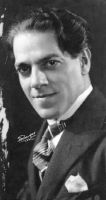
Heitor Villa-Lobos (his first name is sometimes spelled Hector), born in Rio de Janeiro March 5, 1887 and died in the same city November 17, 1959, is a Brazilian composer. With his father, music lover and librarian of vast culture, Villa-Lobos learned piano, clarinet and cello. This will be his instrument of choice. This young musician, rather self-taught, discovered his passion with street musicians. At the age of sixteen, in 1905, he decides to run away from home and will travel to Brazil, especially the regions of Northeast, collecting during his wanderings authentic traditional songs. "I felt stupid to continue to imitate Beethoven. For eight years I have traveled to the remotest regions of Brazil [] thought I was dead and they even said Mass for the repose of my soul! But I brought this incredible wealth of shipping. "He earns his living playing time in cafes and restaurants. He had to make other similar trips later, although it maintains a veil of mystery around them, his own testimony concerning affairs with cannibal tribes of the Northeast is questionable. Subsequently, he studied at the National Institute of Music in Rio de Janeiro, although his music has never complied with any academic standard. As Villa-Lobos will tell many years later: "My music is natural, like a waterfall". And also: "One foot in the academy and you are warped". After another trip ethno-musicology at the heart of the Amazon in 1912, Villa-Lobos returned to Rio de Janeiro. This is, November 13, 1915, he captures the attention of this city with a concert of his new music. It caused a sensation. In 1923 he attracted enough to him favor with officials to get a scholarship to study in Paris. He discovered the riches of Europe. Upon his return in 1930, Villa-Lobos began a great career and educational policy and he was appointed director of music education in Rio de Janeiro. While continuing the composition, it supports the musical life of his country (organization of music education in schools and kindergartens, preparing concerts. ). He also founded the National Conservatory of Singing orphéonique and the Brazilian Academy of Music. In 1944, Villa-Lobos made a trip to the United States to conduct his works, earning critical acclaim and even some popular success. Major works are commissioned by American orchestras, and he even wrote a film score for Hollywood, for the interesting 1945 film Green Mansions. The 1940s are for him a period of international triumph. As composer and conductor, Villa-Lobos is celebrated in Los Angeles to New York and Paris. In 1957, for his seventieth birthday, Brazil establishes the year Villa-Lobos. He died on 17 November 1959 in Rio de Janeiro, city of her heart, leaving about 1,000 works of all styles, including 12 symphonies, 17 string quartets, operas, ballets, suites, symphonic poems, concertos , of vocal works, piano pieces, church music and film scores. Villa-Lobos, beyond being a great composer, was also a music teacher for his country. He devised a system of learning music for generations of Brazilians, based on the rich musical culture of Brazil, and with its roots in a deep and always explicit patriotism. He composed choral music for big hp hearts of school children, often adapted from folklore. His legacy in Brazil today, even among new generations brought up with the samba schools or MTV, it's a deep sense of pride and love for him, mingled with feelings similar to their country. This is surprising, considering he is a composer of "classical" music died more than forty years, we hardly find an equivalent of this craze in North America. Google machine translation: Heitor VILLA LOBOS's original bio |