
Carl ORFF
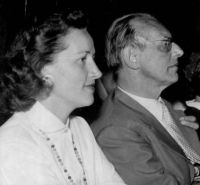
Carl Orff, son of parents good musicians, quickly demonstrated that in his youth with intelligence and curiosity. Later, he does not encounter difficulties in his musical studies while it does not support some of the academicism of his professors. He prefers to improvise to master the piano instead of playing the parts of the old masters. In 1912, he entered the Munich Academy of Music. Again, it does not always agree with his teachers, however, these grades will be fruitful. He composed an opera, Gisei, from a Japanese room and strongly influenced by Claude Debussy. In 1914, he still takes lessons with Hermann interpretation Zilcher. In 1916 he was appointed conductor and music director of the Münchner Kammerspiele. He took part in the war in 1917 but was discharged for injury. On his return he was appointed music director and conductor of opera in Mannheim and Darmstadt. After the war, eager to combine text, music and movement, he devoted himself to the study and composition. He gives up his duties at the Darmstadt Opera. In 1920, he married Alice Solscher whom he had a daughter, Godela in 1921. He married four times, his last wife being Liselotte Schmitz. He is passionate about the Italian Renaissance, he adapted the German Lamento d'Ariana, he edited the Orfeo on modern instruments Ballo delle ingrate and Claudio Monteverdi. In 1924, he founded a dance school: the Güntherschule with Dorothee Günther, a dancer. In 1937 he composed his greatest success: Carmina Burana, CARRYING inspired poems found in Medieval Abbey Beuren. The composer has found his calling and in 1939 he wrote Der Mond (The Moon) and Die Kluge (The wise woman) both inspired by Grimm's Fairy Tales. In 1943, he composed Carmina Catulli and, to complete this triptych pagan "Trionfi", the Trionfo di Afrodite in 1953. Thereafter he no longer writes for musical theater plays such as Antigone or temporum fine Comoedia In his last THEREFOR, returning to the forms of sacred theater with ritual dances. In 1961, he founded his school at the Salzburg Mozarteum and lectures to present his teaching method. He had as a student composer Edwin Carr New Zealand (1926-2003) in the works which we note the imprint of his master. Considered by all, Carl Orff goes out March 29, 1982. It was marked by the music of his time. Attracted by Arnold Schoenberg and Richard Strauss, he felt, however, nothing to atonal music. Orff, however, is known today for Carmina Burana. It sometimes leads to distrust, perhaps because of staying in Germany and have made during the Third Reich, although he never joined his ideas. Google machine translation: Carl ORFF's original bio |